Thursday, April 1, 2010

Headshots- everything you did (and did not) want to know

Just like the term lens can be used to mean anything from a piece of my car to what is inside my glasses frame in the context of being a professional photographer when someone asks me what kind of lens I use I don't answer with my prescription.

Someone might say a headshot is just a shot of your head, or a very very good kill shot. BUT in the modeling, and acting world it means something different.

A headshot in the both the modeling and acting world refers to a very specific set of requirements. Now what is interesting is you do have several kinds of headshots, and those types differ depending on the type of work you are seeking.

Headshots are used for the casting process and promotional purposes, but they are not artistic endeavors. They are there to show what a person looks like in the best way possible. They need to be uniform in nature so a casting director is able to see if the person fits what they are casting for.

1. traditional theatrical headshots-
a traditional theatrical headshot is in black and white. You will see them in any playbill for any show you see.
And that is the exact reason for their cropping and treatment. Playbills are going to crop the photos of the actors to a certain ratio, and the shots are very tiny. That is why you see the actors to the top of their heads and maybe the collarbone. It is a tight shot to make them recognizable.
The lighting in a theatrical headshot is done one of two ways, with natural light and a reflector (more modern), or in a studio with a white, grey or (rarely) black background with a 3 light set-up. Front, hairlight, and background light (traditional).
In addition the headshots are shot from a slightly upward position, giving the actor the ability to look up at his/her viewer.
When printed as 8x10's, remember there is a border that makes the actual images size something like 7.5 by 9, the images have a bit more room like the below example


However, when printed in the playbill they are cropped even tighter


Now a new variation in the theatrical headshot is the horizontal headshot. This shots should really only be used for websites, actors business cards, and for the physical wall of photos placed at the theater. These shots are also used by television actors, but a TV or film person will have a color headshot they give to production, not a black and white shot. But i will go into that later.

Horizontal headshots are almost always done in color, and they are almost always shot outside at a low depth of field with mainly natural reflected light. Many times the top of the head to the collar bone are shown, but no further is really acceptable in a landscape headshot.

It is important to understand why a horizontal headshot is bad at the printed stage, and that is because if you print this shot and send it out to casting directors they put it in a pile. The majority of that pile is vertical headshots, the directors literally pick up the headshot look at it for 1.5 seconds before trashing or keeping it. If they have to pick up your shot, then right it so it is the correct orientation, they might just trash it before they do that. Remember, the whole point of headshots is to give an ease to the casting process.


2. TV or Film headshot-
Now the biggest difference in the reasoning for these headshots being different is that these shots are not going to end up in a playbill somewhere. And tradition.
Some old school agents will still want the black and white cropped shot, even in a TV or film setting. So even if you never do theater, you still will need a theatrical headshot. However, now you will also need a film/tv headshot.
Rarely do these headshots exist in a studio setting, that is seen as old fashioned and limiting. Instead these headshots are done in natural light, with a reflector, and with a blurred background that is of a neutral nature, if not a neutral palate. It is normal for the color s behind the person to be greens, beiges, blues, or other cool or neutral tones. It is rare for a successful headshot to have a busy background, or a super bright primary color in the background. The exception to this is kids headshots, and even they normally don't have primary colors.

Cropping is traditionally less of an issue in these headshots, going from the very tight crop we are used to in theatrical headshots to the breast line or so. You will also see the top of the head in many of the film/tv headshots. However, the shots are still from above and the lens is still at 2.8 or so.
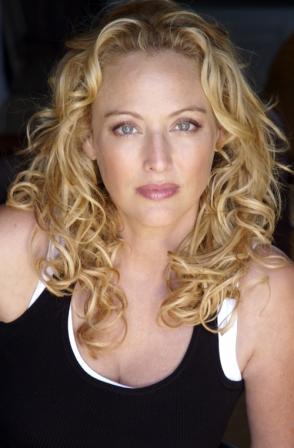


3. the modeling or stock headshot- 
now i am not going to get into beauty shots, because they are NOT headshots in addition to having a "polaroid" most models have a clean commercial headshot. Mainly the modeling headshot follows the same directives as a the TV/Film headshot. The only addition is that models have a ZED card. The front of the zed card is normally a great tearsheet, a headshot OR a beauty shot. The back have either tear sheets or they have at least one body shot.

A note to commercial or stock models, you do need to have a great smiling headshot. Other people might get away with not smiling, but not you.


4. Background casting images-
as with everything in life there is the exception to the casting rules, and that is for background actors. Background actors are many times responsible for bringing a certain look with them. So they need additional shots of themselves "in character." For anyone else that is a bad bad thing, but when casting is looking for a featured extra they need to know you can pull off the look they are featuring. I have shots of me in steampunk, ren faire, green fairy, punk, gothic, banker, scrubs etc... for when I do background work.

And that is not the ONLY exception to the rules. Anyone who is specialty from controtionists, to stilt walkers, to animal trainers. You need a shot of you as what you are doing what you do.

However, most of these photos are not professionally done. You can use existing shots.


Make-up and hair and wardrobe-
For the theatrical, TV and film headshots (as well as stock photography models and commercial models) your hair and make-up should be professionally done. But it should be done in a way as to make you seem natural.
Your wardrobe should be simple. No patterns, nothing too glittery, nothing to shiny, nothing that is too trendy either. Jewelry should be kept to a bare minimum, earrings should be studs or nothing. I would suggest not having a religious symbol like a cross around your neck, and would prefer no necklace.

Roots are a nono, nails should be clean and well manicured.

For women-

a nice plain short sleeved t-shirt in a basic color, at least one grey, blue or black shirt would be good.

the tank top shot- the tank should be plain with no writing, it should also not be in a primary color (with the exception of blue or green)

a soft textile, like a cowl sweater

For men

a nice plain short sleeved t-shirt in a basic color, at least one grey, blue or black shirt would be good.

the tank top shot- the tank should be plain with no writing, it should also not be in a primary color (with the exception of blue or green)

one fitted button up shirt, usually in blue but can be other colors

For older women

instead of the tank consider a nice well fitted, long sleeved shirt. Can be button up.

For older men

instead of the tank bring something that shows who you are as a character actor.

Lets talk retouching-
UNLESS you are a glamour model less is more. The biggest pet peeve casting people have is if you don't look like your headshot. They will dismiss you from a casting based solely on that.

NO BLUR. I don't care what other people told you, blur is a no no. It makes the casting director think you have bad skin. Normal people have pores, or different sizes in different parts of the face. if your headshot doesn't have these, you better not have them in person either.

When people smile they have creases in their eyes and on their cheeks, a smiling shot with no creases will not get you into a casting.

Older people, it is fine to have a few age lines taken out, it is not ok to have a virtual face lift.

That said, it is expected that the shot will have some retouching to it, to give it a polish. If you go with no retouching the casting people will assume it was done, and you might lose work do to that. Good retouching adds just a bit of highlight to the hair, birghtness to the eyes, and a few blemishes and wrinkles removed or softened.

Expression- One of the biggest mistakes new actors make is trying to force a smile. You don't need a smile to look great in a headshot, you do need a great energy. So if you are being sexy, it needs to read sexy, but IMO the best headshots are either smiling, or have the feel that the person is happy. Sad or wistful headshots do not work, with the exception of maybe some fashion models.

Common headshot mistakes

1. being a character. Now if you have several headshot and one of them has you blowing bubble gum, or dressed as a police officer that is fine. But do not submit a photo of you making a funny face to a serious casting. there are exceptions to the rule but those are for people like mime's, contortionists etc... And they usually use a normal headshot for any type of film or theater casting, unless they are submitting to be a mime or contortionist.
This like the next thing I am going to talk about labels you as a background actor, and you don't want background work, you want principal work.

2.
men, wearing a suit- unless it is a fitted Armani suit, or a suit from moods of Norway AND you are a model not an actor then don't wear a suit. it is something background does.

women, no bankers outfits. Simple does not mean business. And this is important, this is a headshot not a business card shot. Be careful, too much of anything make-up, wardrobe, retouching, can make the casting person just think too much drama.

And done- unless i think of more stuff later.

Thursday, October 1, 2009

LA Weekly Best of Issue Publishes!


Go ahead and check it out, lots of photos by me and the gang with awesome compositing and art direction by Darrick Rainey

LA Weekly Best of Issue

Saturday, September 26, 2009

LA Weekly Best of Issue


Coming October 1st, the LA Weekly Best of Issue, featuring photography by Star Foreman

and

featuring models

Sarah Marie Hilker http://www.modelmayhem.com/495771
Chad Coe
Ginger Pullman
Natalie Gibson http://www.modelmayhem.com/326608
Nickie Jean Richards http://www.modelmayhem.com/600866
Jesse Holland http://www.modelmayhem.com/1071013
Rana McAnear http://www.modelmayhem.com/1049977
and
Manny Cazz http://www.modelmayhem.com/125644

Make-up and Hair by Lucy Landweer
http://www.modelmayhem.com/317051

Wardrobe styling by Star Foreman

with locations including

Clifton's Cafeteria in downtown Los Angeles
The Dresden Restaurant
The Old Zoo in Griffith Park
Broadway in Downtown LA

and

The Art Farm in Devore, Ca- locations, wardrobe and animals for rent for photo shoots and video projects
http://www.modelmayhem.com/757129
Baby goat 'Stooge',
Nubian goat 'Scoobie' and
Quarter horse 'Silent'.

Animals courtesy of Karen Deputy of The Art Farm in Devore, Ca
http://www.modelmayhem.com/757129

Studio courtesy of Studio 1008
http://www.modelmayhem.com/1380758

Thursday, August 27, 2009

Is it 1970 or 1930?


today's shoot

Tuesday, August 25, 2009

Tuesday, August 11, 2009

Friday, August 7, 2009

Tuesday, August 4, 2009

Etsy Mini

Monday, August 3, 2009

Saturday, August 1, 2009

blogging along, singing a song, side by side


see me here in this great vintage blog

Where have all the jobs gone?


A continuing argument I have with older more seasoned shooters is the argument that the photo market hasn't changed, and that young photographers just need to call art directors more and show our books around if we want to be hired.

Well, I have news, the market for new photographers hasn't just changed, it has dried up and blown away.

As a photographer who graduated one year ago from the Art Center, I can say that for everyone I know that has graduated in the last year times have been more then tough.

I try and shoot a test every week, or more if I can. I shoot just to keep myself from the feeling that I am about to go under, about to not be able to make it.

I do every type of marketing that comes my way, but it still isn't getting me notcied by more then a handful of people. (Shout out to my peeps at the LA Weekly and OC Weekly! You rock my world and i love ya!)Link

Since graduation I have done many small jobs, multiple gallery shows, some work for the wonderful people at the weeklies, background acting in the movies (Iron Man II is going to be so good!), I even have been retouching images for as low as $10 an image; and still i am not making enough. That is a problem.

The photographers aren’t hiring new assistants, that is just plain true. Instead illegal internships are being offered everywhere I look. The jobs that used to go to journeymen photographers are being offered as TFP. Art directors are not calling in our books, and they aren’t answering their phones. Magazines are closing, or streamlining. Agencies want to have free tests for their new faces divisions. Clothing designers want free or $500 lookbooks with all usage rights. Brides expect to have the entire wedding shot for $500 or LESS.

From what I can see there are two places in the photography market right now, scrapping the barrel bottom and already established top. What this economy has done is it has eliminated the middle ground of photographers, and those are the ones most likely to try out new assistants, and their jobs are the ones most likely to go to new shooters.

As those jobs dry up the photographers who did the steady middle clients are dropping their prices, making it even harder for the “newbies” to find a niche.

I have had four editors look at my book this year. All hired me. But with cold calling, email promos and physical mailing I am just not getting through. It is easy to blame the new photographers for not busting their asses enough to get the jobs, but the fact is the jobs aren’t there to get.

I have one final example, a friend of mine won one of the top photography awards for students two years ago. He has teched for several top photographers, he is an incredible portrait, still life and architectural photographer. He works his ass off doing scouting and assisting, and right now he is living with his parents because the jobs aren’t there.

Wednesday, July 29, 2009

LA Weekly Cover


see the story here

Monday, July 27, 2009

Time magazine writes back

Skye Gurney writes:

"Hi Star,

Clara Waldron forwarded your information to me inquiring about the use of the coin jar on the cover of the April 27, 2009 cover of Time.

The image was purchased from istockphoto with an extended license. You can read the provisions of the extended license here:

http://www.istockphoto.com/extended_license_provisions.php

Best,

Skye Gurney"


Now we just have to find out, did they buy the other licenses they needed?
Multi-Seat (for when you have it on more then one computer at a time?), Items for Resale (the posters you sell online), Electronic Items for Resale (the Kindle download is an example of electronic items for resale)

And if they did, why didn't istock pay their artist what was agreed to for the credits? He was even not paid the amount for the extended license.

TIME magazine cover now pays $31.50


Recently there has been a lot of internet buzz on how TIME magazine used an istock photo as the cover of an issue last April.

I first ran across the TIME magazine istock cover on a forum at the website modelmayhem. What I noticed right away, is that the number for the photographer payout and the licensing numbers istock charges were not adding up.

Now one of the things we are seeing is how an issue like this can go viral.

EDIT: We don't know what TIME paid for. We only have the photographer's word on what he was paid. He was paid, according to his word, $31.50, 20% of what TIME paid for licensing. Istock guarantees its contributers no less then 19¢ per credit. We know what TIME should have paid in terms of credits for the image, so we know about what number of credits TIME purchased. TIME purchased somewhere around 158 credits (if we go from the lowest payscale per credit possible), which is not the full 400 and some credits they would have needed.

Also in fair disclosure I don't think TIME deliberately bought the wrong license, didn't credit the photographer, and sold the image illegally. However I do believe that TIME does not currently hold the correct licenses, and owes the fees set force in the license they have bought to istock photo, and the photographer. I do not believe they should be allowed to retroactively buy more licensing. /end edit


Pro photographers and hobbiests arguing back and forth over what TIME should pay for a cover, how micro stock is ruining the industry; and of course, in the end, somebody had to call communism.

Well here is answer to that argument, that saying paying a working wage is communism, it isn't. It is objectivism.

So that is that, but more then that I am concerned over the apparent disregard TIME magazine is showing to the licensing agreement they made with istock photos, which is the manager for the artist's work in this particular case.

With the payment made to the photographer it looks like TIME bought 87 "credits" from istock.com. That is a multi-user license (which they need if they want it on more then one computer at a time,) and the standard license.

As an objectivist I have problems with this, and I have been stating my problems all along.

1. the amount the artist was paid WAS NOT the amount he should have been paid. Not should have in a universe owes him way, but should have as in the magazine bought the wrong usage way. I have outlined this at the end of this post if you want to understand my reasoning.

TIME currently states its circulation is around 3 million. So accordingly they have broken their licensing agreement with istock and oversold by 2.5 million. Istock charges a fee of .01 for every publishing past 500,000 on the normal license. Because of the payout to the photographer we know TIME did not buy an extended license.

So far no one has come forward explaining how istock is going to fix this. So far no one has explained how TIME is going to fix this.

2. Let's talk about communism.

Let's not talk about communism, lets talk about objectivism.

"No man is a means to an end. Man is an end to himself."

What does that mean? Well it means that by hiding who buys your photos istock is currently making it difficult to track down usage misconduct. So when a magazine like TIME makes at least 3 licensing errors, the person who owns the photo doesn't know. If they don't know, how can they ask for fair payment, and for istock to uphold their rights as the agent who sold the photo.

This cover is from last APRIL. The photographer just saw it now. Istock must have known it was being used, and they must have known that the photographer was not getting the usage payment they agreed to give for this type of usage, but they have done nothing.

They have shut down the discussion in their forums, and so far have made no statements.

Everyone must take responsibility for their own lives. And that means honoring your contracts. Two contracts have been broken here,

a. the contract between the photographer and the micro stock company which has failed to take action against a broken licensing agreement

b. the contract between TIME and the microstock agency, TIME has failed to buy the license for the product they have used. How is that different then shoplifting? They were hoping nobody noticed they took what wasn't theirs.

3. Lets talk about objectivism again.

The whole man an end to a means thing, that encompasses paying a fair labor rate to your contractors, employees and other people you do business with. It means don't take everything you can grab at an unfair rate of pay, rather pay your own way and other people will pay their own way. Take care of yourself, but not by taking advantage of others.

What many of us have found to be insulting is that the OP doesn't really care that TIME owes him about $5,000+ just in unpaid licensing, according to the contract TIME signed when acquiring the photo.

He doesn't care that by excluding his name that TIME again broke the licensing agreement, and that the framed artwork sales make a THIRD time that the magazine is doing an unlawful usage.

At the rate of $150,000 per violation, and the fact that in the 90s in the USA commercial copyright violation involving more than 10 copies and value over $2500 was made a felony, TIME and istock should be jumping onto this burning barge before it becomes a real news story. Not shutting down all discussion, or not coming in and saying what they will do to rectify.

And that is where people like me, and other professional photographers have to step in and say even if he doesn't care we have to care. That by not taking action against TIME magazine we are not the people who will lose out in the end.

The next time the magazine oversteps its bounds, and istock decides to notice because this time the photographer does care, it will be too late. Having been informed of this behavior in the past, and done nothing to stop it, istock has set the precedent for how it will enforce its licensing contracts.

If they take action they can get money owed, and damages and copyright violation damages. But only if they step in, only if they say something.

And that my friend is not communism, it is objectivism. Taking care of yourself. Not using others to obtain your goals, with no thought to the consequences to the people you use.

It is a social construct, but so is everything.


some information on istock and the licensing they sell


the licensing for what TIME magazine used would be 462 "credits". The smallest amount per credit that this could pay out still totals to a $91.20. (according to istock's credit calculator)

Also they CANNOT do the unlimited sales of a poster by any available istock license.

Here is the extended license clauses, and because of the artist's payout it is obvious they DID NOT buy a full extended license.

"Items for Resale - Limited Run

Notwithstanding the restriction contained in section 4(a) of the Standard License Prohibitions prohibiting the use or display of the Content in items for resale, you shall be entitled with respect to this specific Content to produce the following items for resale, license, or other distribution:

1. up to 100,000 postcards, greeting cards or other cards, stationery, stickers, and paper products,
2. up to 10,000 posters, calendars or other similar publications, mugs or mousepads,
3. or up to 2,000 t-shirts, sweatshirts, or other apparel, games, toys, entertainment goods, framed or mounted artwork

in or on which the Content is used or displayed (the "Resale Merchandise"), provided that:

1. the right to produce the Resale Merchandise in no way grants any right to you or any recipient of the Resale Merchandise in any intellectual property or other rights to the Content;
2. you agree to indemnify the iStockphoto Parties from any cost, liability, damages or expense incurred by any of them relating to or in connection with any of the Resale Merchandise;
3. any production of Resale Merchandise in excess of the allowed run size is prohibited and requires the Content to be purchased separately;
4. all other terms and conditions of the Agreement remain in full force and effect, including all Prohibited Uses."

THEY DID NEED TO CREDIT the photographer as the artist

from the extended license
"Reproduction / Print Run Limits

Notwithstanding the restriction contained in section 4(a)(14) of the Standard License Prohibitions limiting you to 500,000 reproductions, you shall be entitled with respect to this Content to an unlimited number of reproductions, and the Agreement is deemed amended in that respect. All other terms and conditions of the Agreement remain in full force and effect, including all Prohibited Uses."

from the standard licensing contract

"may not use the Content for editorial purposes without including the following credit adjacent to the Content:[b] “©iStockphoto.com/Artist’s Member Name]; or
# either individually or in combination with others, reproduce the Content, or an element of the Content, in excess of[b] 500,000 times without obtaining an Extended License, in which event you shall be required to pay an additional royalty fee equal to US $0.01 for each reproduction which is in excess of 500,000 reproductions. This additional royalty does not apply to advertisements in magazines, newspapers or websites or to broadcast by television, web-cast or theatrical production."

in the spirit of fairness I should mention that I do contribute to some microstock agencies.

Sunday, July 26, 2009

Vote for me spam- please

I kinda hate doing this, but since this year surface magazine has decided on a very poorly designed popular vote

If you have the time vote for me here
vote

and here

second spam vote

Friday, July 24, 2009

When will Facebook learn that stealing isn't nice?


"Facebook has agreed to let third party advertisers use your posted pictures without your permission. Click on SETTINGS up at the top where you see the log out link. Select PRIVACY. Then select NEWS FEEDS AND WALL. Next select the tab that reads FACE BOOK ADS. There is a drop down box, select NO ONE. Then SAVE your changes.

(REPOST to let your friends know!)"

Wednesday, July 22, 2009

Fast - Good - Cheap

You have to choose, and since i don't do anything other then good you get to have good and fast, so you can't have cheap-- or good and cheap, but that means it ain't gonna be fast.

There are always clients that contract with you and try to change the rules after the fact, but don't let them. You can't work every day all day at your computer retouching, and you shouldn't have to.

If your clients can't understand the mantra, they shouldn't be your clients.

Google Calendar